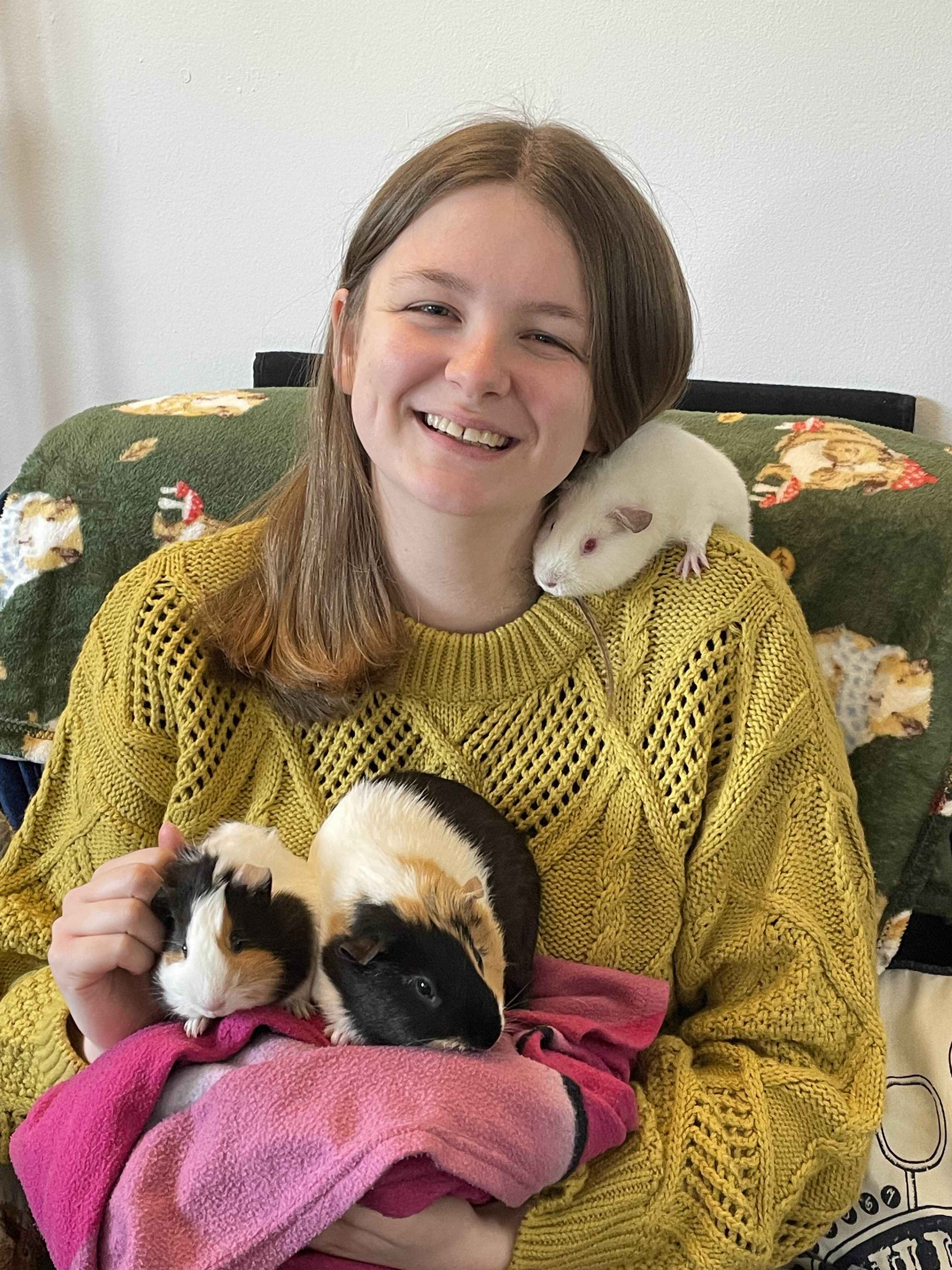
I struggled for a while to write this introductory segment; you might think that writing about myself would be my strongest subject, but it’s complicated. Writing about yourself is embarrassing and sensitive; I didn’t want to give the wrong impression. So instead, I have decided to write about what I want to do.
I am Katy, a writer and devoted piggy-mum to three adorable guinea pigs. My brain-housemates are Autism, Dyspraxia, and Sensory Processing Dysfunction, and they make my life different, complicated, sometimes fun, but most of all challenging. I began seriously researching neurodiversity during my master’s degree in creative writing. It was mentally tiring (and still is) to learn about a subject that is so directly related to myself, but it was a great inspiration for some neurodiverse characters that emerged from it.
I ended up producing a first-class dissertation: a fictional story about the romantic exploration of an autistic writer, written with the intention of educating not just neurodiverse readers, but also the people who love them and want them to be successful in their romantic lives.
One thing that keeps coming back to me from the long and exhausting process of writing this piece, which was so close to home, though, was my assigned writing mentor’s reactions to what I wrote. Being assigned a middle-aged man for my young adult romance piece sparked a lot of confusion in my mind but was ultimately the most ideal test reader for the story. You see, he didn’t have the slightest clue about autism and how it affected people, and with each extract of the story that I shared with him, he learned more about the experience. What sticks with me most was when I shared the horrific sensory overload of eating at a restaurant. He had no clue at all that public places like restaurants could be like that for anyone.
I don’t know why I assumed that the eating out experience was the same for everyone; the overpowering smell of not just dishes, but the people sitting so close around you, the strain of trying to hear what is being said to you over the rattle of voices and scraping plates, the glaringly intense lighting at times, even the social drain of being expected to choose what you want to eat as quickly as everyone around you. But for him, he would show up to dinner, enjoy the chatter and camaraderie without struggling to hear what’s being said, without the drain of having to balance all the different sensory intakes hitting him at once, and then go home, just another meal out with friends.
This has all just been a long-winded way of saying that an ideal world would be one where everyone understood and was sympathetic to the experiences and difficulties of others. But since we don’t live in an ideal world, the best I can do is provide my own perspective on the lived experience of neurodiversity and if it helps even one person, be it a confused neurodiverse person, an autism parent, a school teacher, or even a restaurant manager, to understand how they can recognise and support someone who is struggling, then so be it.
I aim to do this through personal stories, fictional perspectives, book reviewing, quick “Top 5” experiences, and sharing what other people have said about these experiences. Maybe sometimes I will occasionally take a break from the information dumping and post something a bit different, not too often, just a mini special interest-share.
I welcome messages and requests from any reader who wants to know more about certain topics, or even if you just want to share your own experience and hear that it’s not just you.
I want to end this introduction with the reminder that neurodiversity is a spectrum, and whilst some of the experiences that come with it might apply to some people in varying severities, it will not apply to all. Everyone is individually different and should be accepted that way.

Leave a Reply